Industries We Serve
Hospitality
Hospitality
& F&B
Elevate the guest experience while eliminating the staffing crisis that costs NYC hospitality operators the most.
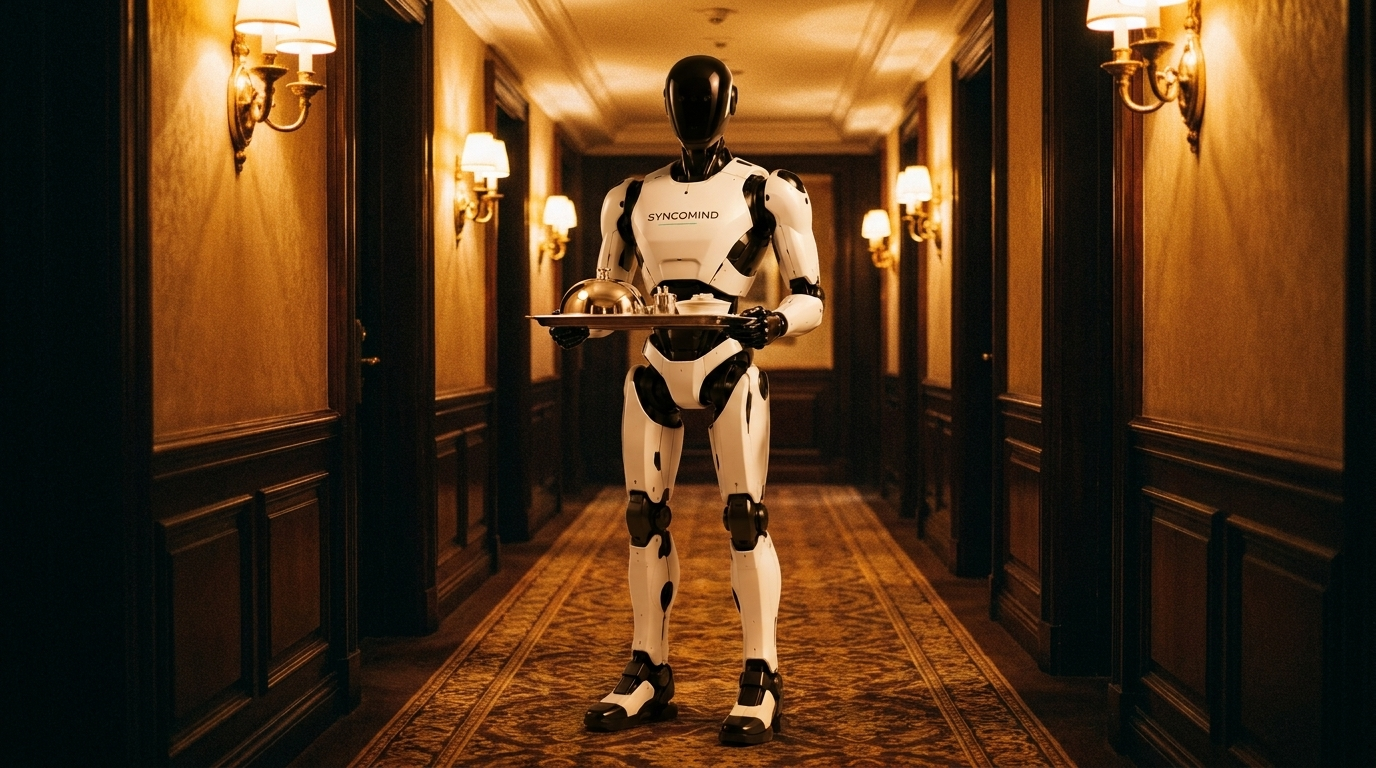
Elevate the guest experience while eliminating the staffing crisis that costs NYC hospitality operators the most.
Hospitality staffing shortages have become a persistent structural challenge — not a post-pandemic anomaly. New York City compounds the problem: NYC hospitality labor costs rank among the highest in the nation, and the competitive talent market shows no sign of easing.
Robots are no longer a novelty — they are a structural response to a labor problem that cannot be solved by hiring alone.
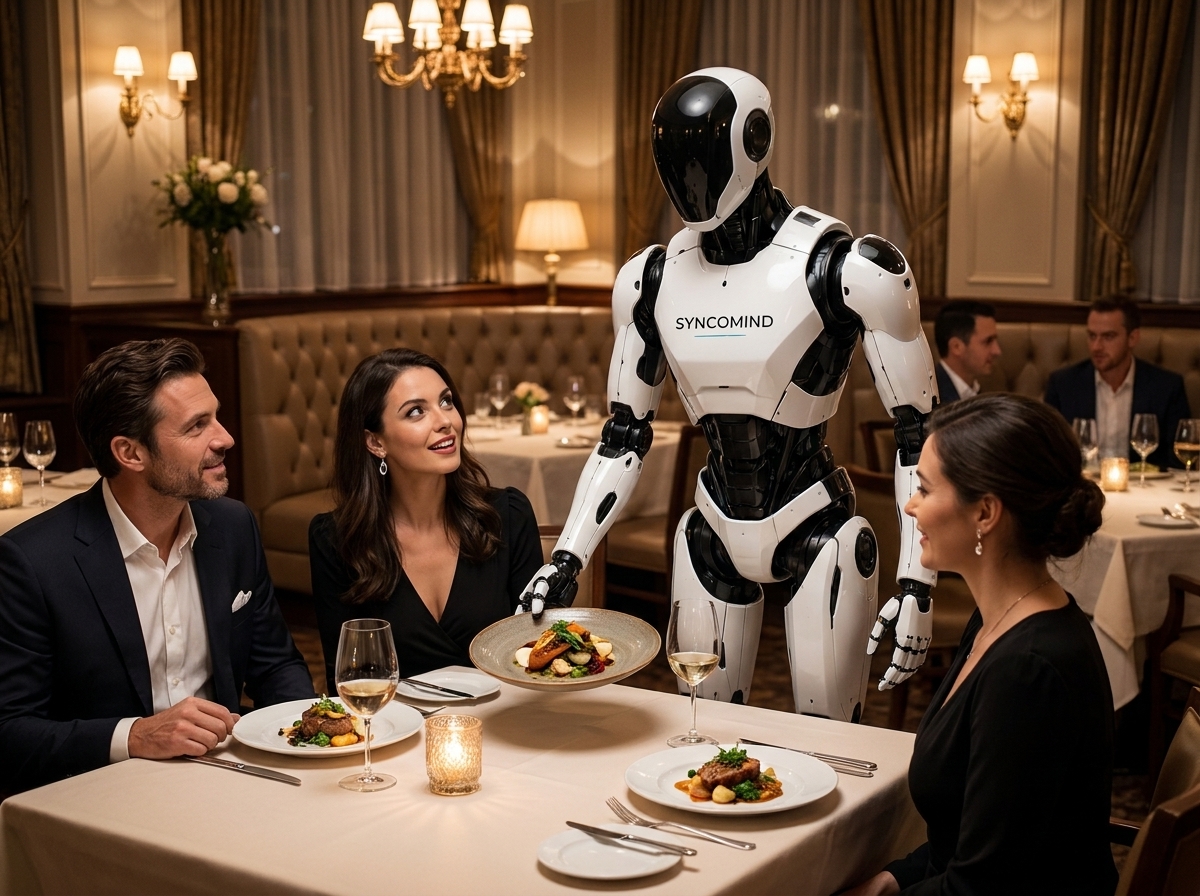
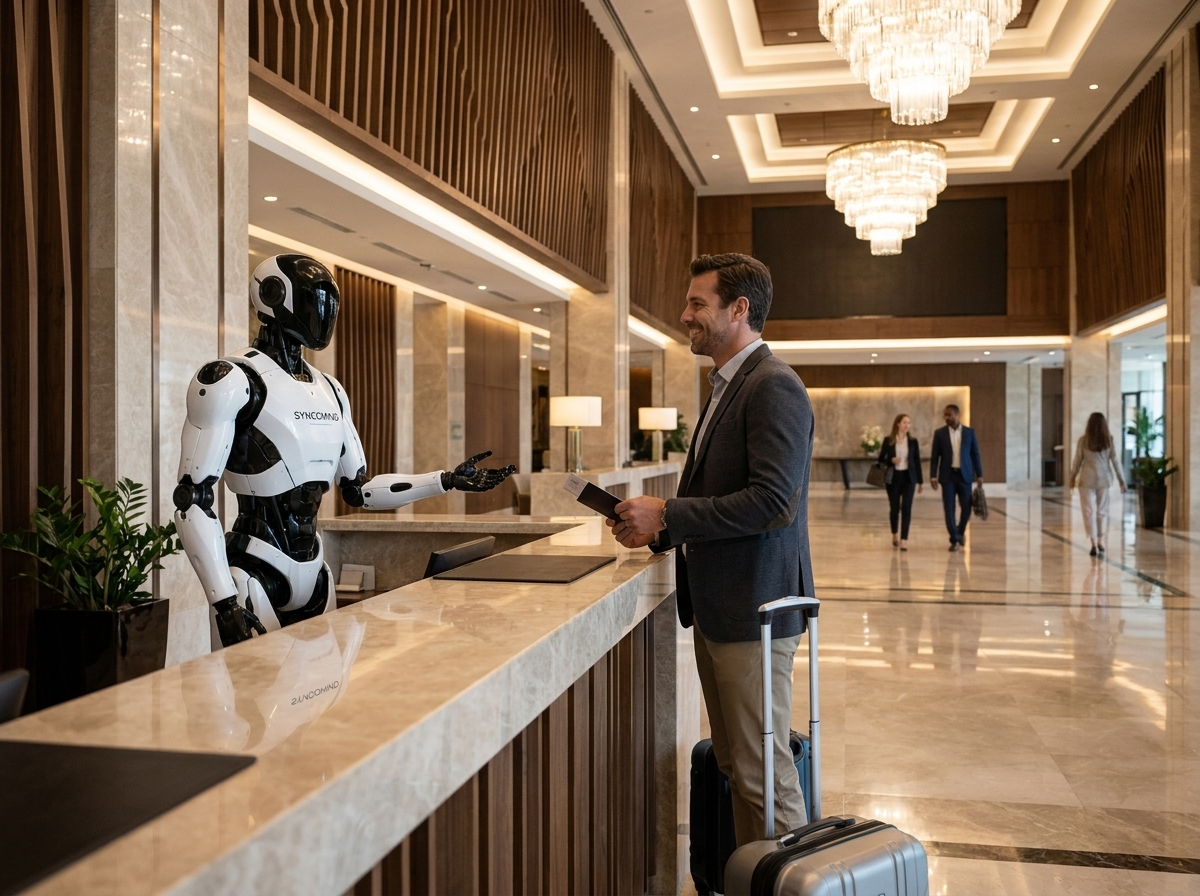
SyncoMind deploys humanoid robots that perform the repetitive, high-frequency, high-cost tasks that drain front-of-house teams: food and beverage delivery, room service, amenity runs, table clearing, guest directions, and basic service interactions. Guest acceptance is already higher than most operators expect.
Multilingual guest greetings, directional assistance, FAQ responses, local recommendations, check-in queue support, and lobby wayfinding. Available in Mandarin, Spanish, Cantonese, Japanese, French, and more — ideal for NYC's diverse international visitor and resident base.
Room service delivery, in-restaurant food running, amenity delivery to hotel rooms, and bar-to-table service. Robots navigate elevator banks, navigate corridors, knock on doors, and confirm delivery — reducing the labor cost of every delivery interaction without impacting the guest experience.
Table clearing, dirty plate collection, linen changes in F&B settings, and service assistance during peak periods. Robots operate alongside your existing team — taking over the repetitive, time-consuming physical tasks so human staff can focus on relationship-building and complex guest interactions.
Public area maintenance, lobby floor monitoring, spill detection and basic response, and turnover support for high-volume F&B settings. Keeps public spaces consistently presentable during busy periods without diverting housekeeping staff from room turnovers.
The financial case is straightforward. A robot operating at $8–15/hr runs three shifts per day — replacing tasks that previously required multiple staff positions at NYC's $17/hr minimum wage floor. Every hour a robot runs, the labor cost differential compounds.
High-frequency tasks — room service delivery, food running, amenity delivery, table clearing — are where the math works best. They are repetitive, time-intensive, and don't require the human judgment that your best staff should be focused on.
SyncoMind models the economics before deployment. We walk through your task volume, your labor cost structure, and your operational hours — and show you the savings projection before you sign anything.
The robot operates at $8–15/hr fully loaded — against NYC's $17/hr minimum wage, before payroll taxes, benefits, training, or turnover cost.
A single robot covers three shifts per day without overtime premium, sick day gaps, or scheduling overhead — compounding the cost advantage continuously.
SyncoMind provides a facility-specific economic model before any engagement — task volume, labor displacement, and projected savings based on your actual operation.
The most common operator concern about hospitality robotics is guest reaction. Early deployments tell a different story. Guest acceptance of robotic service interactions has risen substantially, driven by positive early experiences at adopter properties — particularly for delivery, wayfinding, and service support functions where speed and consistency matter most.
The hospitality guest of 2026 has different expectations than the guest of 2016. App-based check-in, kiosk ordering, and contactless interactions are now standard. Robots fit naturally into that service model — and 8+ language support means every guest, regardless of origin, gets a consistent welcome.
New York City welcomed over 62 million visitors in 2024 — a visitor base that includes substantial populations of Mandarin, Cantonese, Spanish, French, Japanese, Korean, and Portuguese speakers, among many others. A front-of-house robot that speaks only English is leaving value on the table.
SyncoMind's AGIBOT robots are configured with multilingual voice interaction out of the box, with language selection available automatically through voice recognition or manual guest input. Default languages include English, Mandarin, Cantonese, Spanish, French, and Japanese — with additional languages available through customization.
For hotel properties with specific international markets — a Midtown property serving Chinese tour groups, a downtown hotel with Latin American business travelers — language configuration can be customized per deployment zone or per time of day.
We scope hospitality deployments with a site visit and operational analysis — so you see the ROI before you commit to a robot.
Talk to our team