Industries We Serve
Healthcare
Reduce administrative burden, cut supply chain costs, and let clinical staff focus on patients — not logistics.
Reduce administrative burden, cut supply chain costs, and let clinical staff focus on patients — not logistics.
Healthcare facilities face a convergence of pressures: a persistent clinical labor shortage, rising labor costs, growing infection control requirements, and tightening margins. Non-clinical tasks — supply delivery, materials transport, wayfinding assistance — consume hours of trained clinical staff time every shift.
New York City is one of the nation's highest-cost healthcare labor markets, with dozens of major hospital systems and hundreds of outpatient facilities. The cost of non-clinical labor — at $17 or more per hour for entry-level roles and significantly more for trained positions — is significant and growing. SyncoMind deploys humanoid robots to absorb that non-clinical workload — operating at $8–15 per hour RaaS equivalent, 24 hours a day, without overtime.
Deployment is in early-commercial stage, with leading healthcare systems beginning structured pilots. Early adopters report meaningful reductions in workplace injuries tied to manual materials handling — a direct operational benefit alongside the labor cost case.
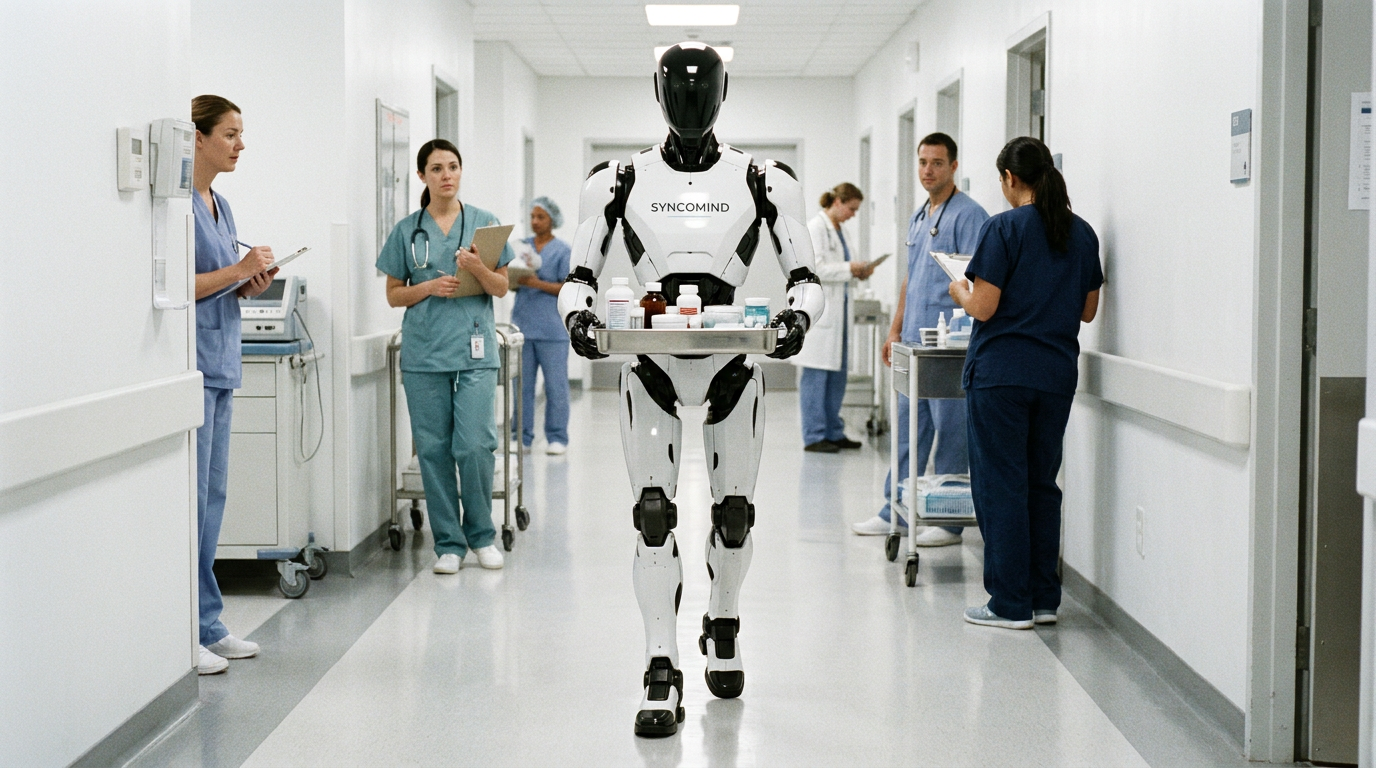
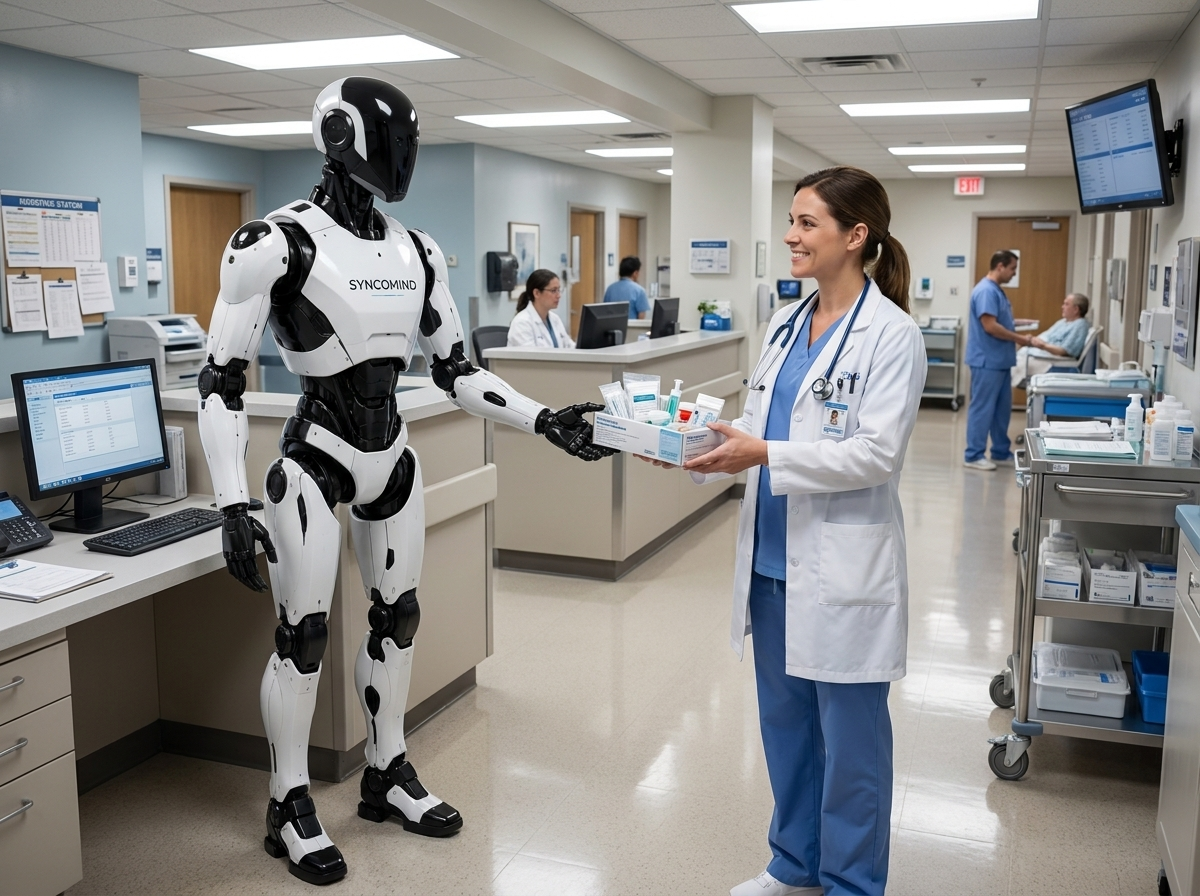
Pharmacy runs, linen transport, specimen routing between departments, clean supply delivery to patient areas, and restocking of procedure rooms. Robots navigate hospital corridors, operate elevators, and interface with automated dispensing systems — freeing clinical staff from hours of daily logistics.
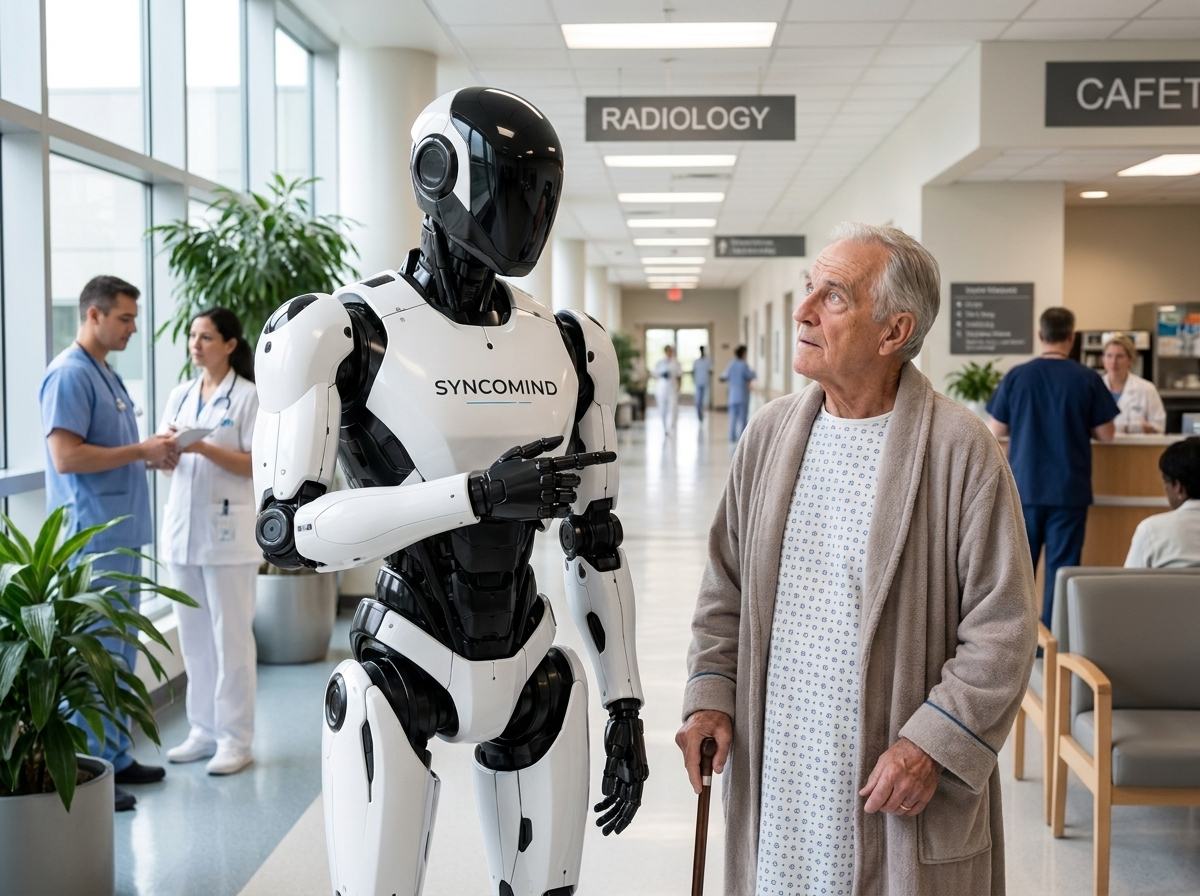
Multilingual wayfinding assistance for patients and visitors navigating complex hospital campuses, check-in support at outpatient reception, appointment confirmation, and department directory guidance. Available in English, Spanish, Mandarin, Cantonese, and additional languages on request.
Sterile supply delivery to operating rooms, waste removal from patient areas, soiled linen collection, and biohazard transport routing — all in contactless configuration. Reduces cross-contamination risk and removes clinical staff from routine infection-exposure scenarios.
After-hours facility patrol, access logging, anomaly detection and alerting, and perimeter monitoring in low-traffic periods. Robots document patrol routes and flag irregularities to security staff via FleetOS — extending coverage without adding headcount for overnight shifts.
Healthcare deployments require a different configuration standard. SyncoMind's HIPAA-compatible FleetOS configuration ensures that robots operating in clinical environments meet the data governance requirements your compliance team needs.
Every healthcare deployment is reviewed by our technical team before go-live to ensure compliance configuration is in place. We work directly with your IT security and compliance teams during the deployment phase.
New York City's healthcare sector operates under labor cost pressures unlike anywhere else in the country. Minimum wage drives floor-level costs higher year over year, and clinical staff salaries reflect a tight talent market in one of the world's most competitive metros.
Non-clinical roles — supply chain, transport, wayfinding, facility management — represent a significant portion of operational headcount in large hospital networks. These are precisely the roles where humanoid robots can operate without any reduction in patient care quality, and where the financial case is clearest.
SyncoMind is actively scoping deployments with hospital networks and outpatient groups across Manhattan, Brooklyn, Queens, and the broader metro area. We work with both large systems and independent facilities — the economics improve at scale, but single-facility pilots are viable from the first unit.
We scope healthcare deployments in detail — facility walk-through, compliance review, and a clear deployment timeline before any commitment.
Start the conversation