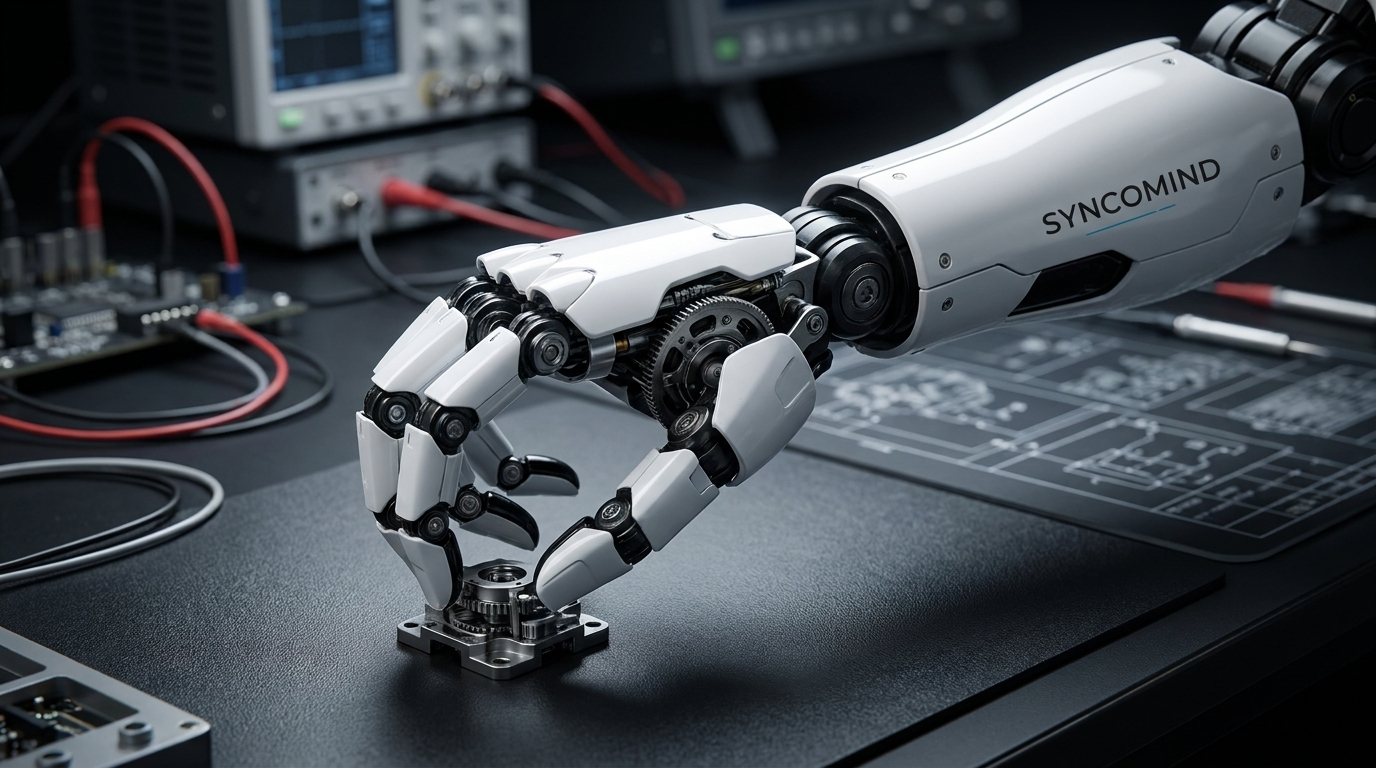
Every robot task performed in the real world generates data the internet cannot provide. SyncoMind's commercial fleets produce it continuously — across New York City, every hour of every day.
What Embodied AI Data Is
The kind of data AI labs cannot scrape.
The internet contains an enormous record of human language, images, and video. It contains almost nothing about how physical objects behave when touched, grasped, moved, or assembled by a robot in an unpredictable environment.
Embodied AI data is the record of physical interaction — and it can only be generated by robots actually deployed in the real world.
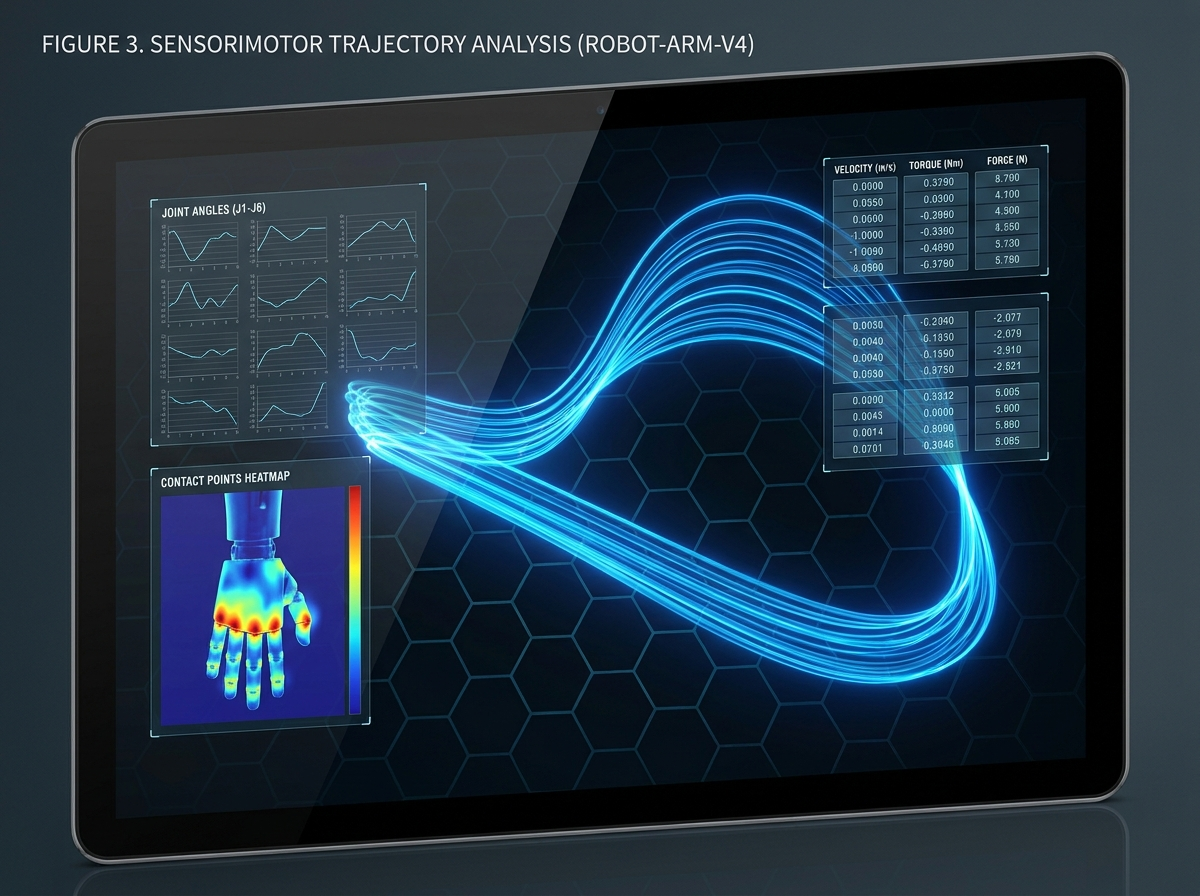
Synchronized joint angles at every degree of freedom, every millisecond
Gripper forces — how much pressure, where, for how long
Stereo camera frames time-locked to motor commands
Task context and environment state at moment of action
Recovery behaviors — what happens when something goes wrong
Action-paired sensorimotor sequences across thousands of real tasks
The Scarcity
In 2026, AI performance is constrained by data — not models.
Foundation model architectures have converged. The differentiator for the next generation of autonomous robots is not a better transformer — it is access to diverse, high-quality real-world interaction data that teaches physical intuition.
This data cannot be scraped from the internet. It cannot be fabricated at sufficient fidelity in simulation alone. It requires physical robots deployed in real commercial environments, performing real tasks, over sustained time.
That is precisely what SyncoMind builds. Every client deployment is also a data asset.
How SyncoMind Generates It
Commercial deployment at scale — across the most diverse environments on earth.
New York City places humanoid robots in a density of environments — hospitals, hotel lobbies, restaurant dining rooms, retail floors, office towers, logistics facilities — that no single research institution can replicate. SyncoMind's deployed fleets operate across all of them, generating data 24 hours a day across radically different physical contexts.
Diverse Environments
Real Variability
Healthcare, hospitality, retail, logistics, corporate — each environment presents different surfaces, objects, lighting conditions, and human interaction patterns. Variation is what makes training data valuable.
Continuous Generation
24/7 Collection
Commercial robots operate on production schedules, not research schedules. Data is collected across all shifts, all days, capturing the full distribution of conditions a deployed robot encounters over time.
AGIBOT Infrastructure
Fleet-Wide Model Updates
AGIBOT's simulation platform and standardized deployment framework enable fleet-wide model updates. Insights from collected data can be incorporated into behavior models and pushed to the entire fleet automatically.
Use Cases
What researchers do with it.
Foundation Models
Generalist Robot Training
Large-scale action datasets that teach robots to generalize across tasks and environments — the physical equivalent of the internet corpus used to train language models.
VLA Models
Vision-Language-Action
Training data for vision-language-action models that must connect natural language instructions to physical manipulation sequences — the cutting edge of embodied AI research in 2026.
Generalization Research
Out-of-Distribution Behavior
Real-world data is messy, noisy, and unpredictable — exactly what makes it irreplaceable for training robots that must handle edge cases in deployment, not just controlled lab conditions.
Privacy & Ethics
No personal data. No exceptions.
All embodied AI data collected through SyncoMind deployments is anonymized at the point of collection. No faces, no identifiable individuals, no personal information. The data we generate is sensorimotor — joint angles, forces, camera frames of tasks, not people.
Healthcare deployments follow HIPAA-aligned data practices. Clients retain transparency into what data categories are collected on their premises, with opt-out provisions available for sensitive environments.
Anonymized at collection — no personal identifiers
Sensorimotor data only — joint, force, visual task data
HIPAA-aligned data practices for healthcare deployments
Client transparency into data categories collected on-site
Opt-out provisions available for sensitive environments
No facial recognition or biometric data capture
Interested in data partnership?
AI laboratories, robotics companies, and research institutions — inquire about access to SyncoMind's embodied AI datasets, licensing terms, and custom collection programs.